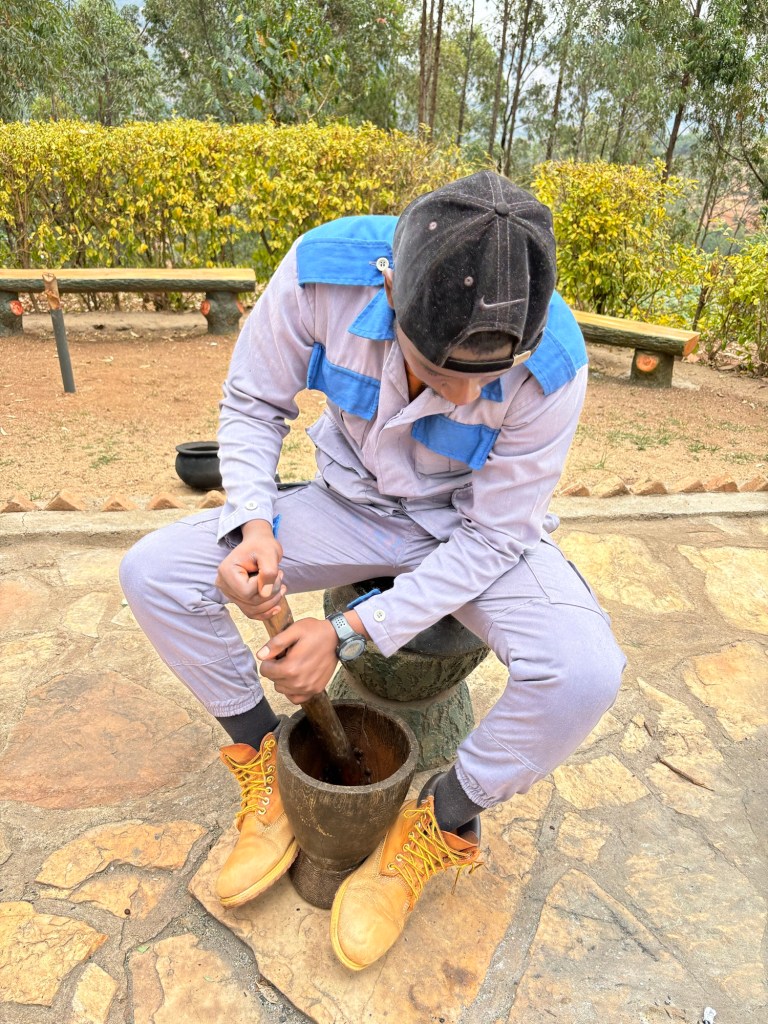
Last September, I had the opportunity to join a coffee tour program in Rwanda organized by a private coffee company. Among the many highlights, one stood out: the inclusion of an Ethiopian coffee ceremony as part of the itinerary. As an Ethiopian coffee tourism and culture researcher, witnessing this ceremony outside of Ethiopia was an intriguing experience.
However, the ceremony took an unexpected turn. After the traditional steps of roasting, grinding, and brewing were performed with meticulous care, the coffee was served—not in the customary cups of clay or porcelain, but in simple paper cups. This small yet significant deviation from tradition prompted me to reflect on the evolving nature of cultural practices, especially when they are carried across borders and adapted for convenience.
Ethiopian coffee culture, with its centuries-old rituals, is more than just a way to prepare coffee; it is a symbolic act that ties the community together, reflects hospitality, and carries deep historical meaning. The intricacies of the ceremony—the tools, the scents, and the communal sharing of coffee—are all integral to its cultural identity. Yet, in this Rwandan context, practicality triumphed over tradition as the paper cups replaced the traditional vessels.
While there’s no denying that the use of paper cups made the ceremony more convenient for the setting, it also highlighted a larger conversation about cultural preservation. The convenience of modern life often comes at the expense of tradition. This incident was a powerful reminder that, as traditions like the Ethiopian coffee ceremony travel and evolve globally, they risk losing their authentic context. Those who engage with these practices outside their original setting might not fully grasp the deeper cultural significance behind every action, every movement, and every tool used in the ceremony.
What is lost in translation when a tradition is practiced without understanding its roots? And how can we balance the preservation of these cultural practices with the demands of globalization? The Ethiopian coffee ceremony, like many other cultural traditions, faces the challenge of remaining true to its origins while adapting to modern times. It is easy to simplify and transform traditions into something more marketable, but we must ask ourselves: What are we sacrificing in the process?
This experience in Rwanda reinforced my belief in the importance of cultural education and awareness. As we share traditions across borders, it’s vital to not only appreciate the aesthetic and the ritual, but to understand the stories, history, and significance that give these practices meaning. Without this, we risk creating hollow imitations of something far deeper and richer than a mere performance for an audience.
In the end, it’s a call for a more mindful and respectful approach to cultural exchange—one that values the origins and context of the practices we seek to share with the world.

Discover more from Coffee Odysseys
Subscribe to get the latest posts sent to your email.

