In 2013, I embarked on a spontaneous trip to Crete with minimal preparation. After attending a tourism conference, I had a brief opportunity to explore the island. I expected to spend most of my time resting at the hotel, as I had no clear itinerary. Hoping to get travel tips during the flight, I was disappointed when no such information was offered. Fortunately, a friendly couple seated next to me provided valuable advice on must-try local dishes. In return, I listened to their family stories, admired their photos, and learned about their children and son-in-law.
Upon arriving in Heraklion, Crete’s capital, I found the city quieter and more desolate than expected. After checking into my hotel, I wandered aimlessly, searching for a place to eat. Eventually, I stumbled upon a hidden alley and spotted the only open restaurant. Feeling hesitant, I peeked inside, unsure of how to communicate since my Greek was limited to simple greetings. The owner, who spoke little English, seemed equally nervous. Yet something about the atmosphere drew me in, and I decided to give it a try.
The owner and her son brought over a menu, their apprehension evident. Recalling the couple’s recommendations from the flight, I named a few Cretan dishes. Their faces lit up, and soon I was served an array of food: a rich pork dish (delicious but overly salty without rice), snails, fresh bread, and a gigantic salad. When I ordered wine, they brought out an entire glass jug filled to the brim. Although I was hungry, the portion sizes overwhelmed me.
Nearby, a group of French tourists noticed my predicament. After offering them some of my food, they reciprocated by sending a plate from their order. What started under the afternoon sun ended beneath the night sky, as I slowly savored the meal. When I went to pay, the owner’s husband appeared and, in broken English, explained that I only needed to pay for the salad. He smiled and said, “You ordered too much because you didn’t know our culture. But to us, you are a guest in our home.” I tried to pay for the wine and dessert, but he gently refused.
Due to the conference schedule, I couldn’t return to the restaurant often, as most meals were arranged elsewhere. However, on my final day, I made time to visit again. This time, they treated me to Greek coffee and dessert. I asked if I could watch how the coffee was made, and the owner kindly invited me into the kitchen. As I observed the process, I promised to return one day, though deep down, I wasn’t sure if that would happen. Even now, whenever I buy thick feta cheese for a Greek salad, I think of that warm-hearted family and their alleyway restaurant.
Before leaving Crete, I visited the Nikos Kazantzakis Museum, located outside the city center. Though I wanted to visit his gravesite, I couldn’t arrange transport. The museum was under renovation, and the construction materials outside made it appear uninviting. However, once inside, I was captivated by its treasures—handwritten manuscripts, translated editions of his works, and exhibits chronicling his life and career.
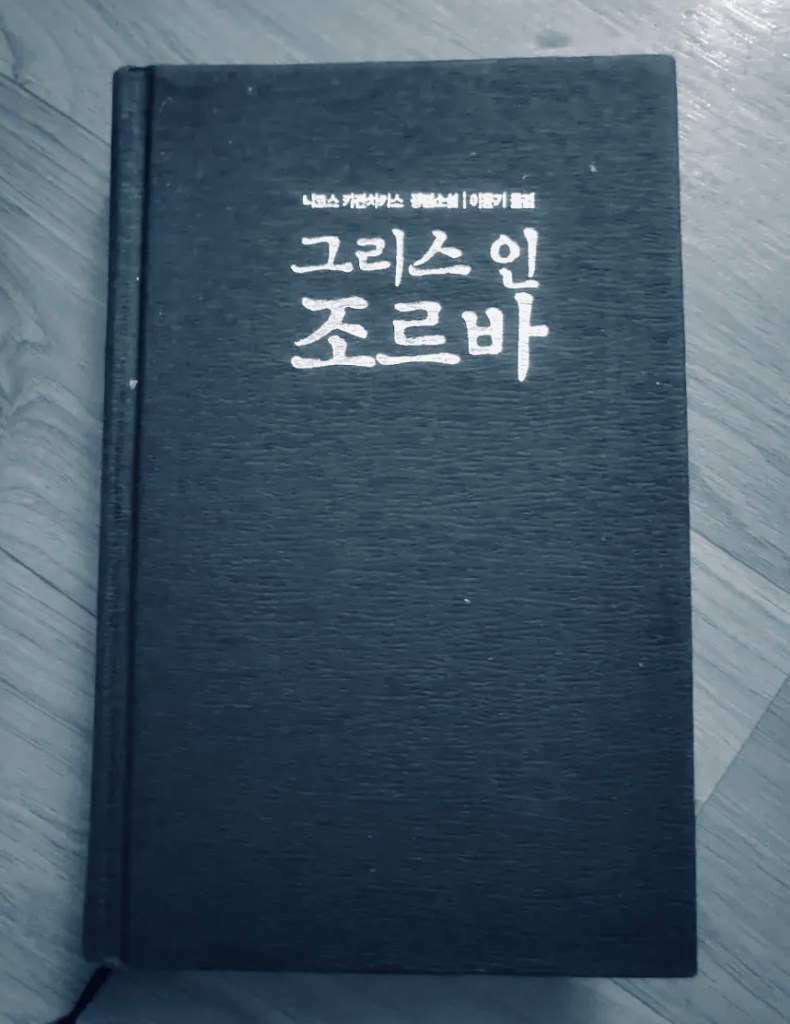
While browsing the translations of Zorba the Greek, I noticed editions in Japanese and Chinese but was disappointed not to find a Korean version. I knew that the late Korean translator Lee Yoon-ki (이윤기) had visited Crete and that many Koreans admired both Kazantzakis and Lee’s translation. It felt disheartening not to see it represented.
After returning to the UK, where I was pursuing my PhD, I stumbled upon an advertisement for Zorba the Greek. Inspired, I emailed the publisher, suggesting they send a Korean edition to the Kazantzakis Museum. I didn’t expect a reply and never received one. Still, the idea lingered in my mind.
That’s when I remembered a friend, Gi-no (기노), a writer who had often sent me books and essentials while I was studying abroad. I reached out to her, explaining the situation and asking if she could send a copy of Zorba the Greek to the museum. Her response was immediate: “Got it!”
A few weeks later, the museum contacted me to express their gratitude, saying they had received the book and planned to display it. My seemingly random act had come full circle. Now, if I ever return to Crete, I’ll feel a special connection knowing that I helped bring a Korean edition of Zorba the Greek to its rightful place.
The moment I first arrived at Nikos Kazantzakis Airport, named after the island’s beloved author, left a deep impression on me. Crete’s pride in its literary heritage resonated profoundly. The island has a unique charm that stays with you—through its food, literature, and unexpected encounters, it weaves itself into your soul. Perhaps that’s the true magic of travel: those serendipitous moments that connect us across time, borders, and cultures.
Discover more from Coffee Odysseys
Subscribe to get the latest posts sent to your email.

